

Deep dive on Bone Health
Elizabeth Houston - Higher Nature Nutritional Therapist - Dip BCNH mbant mCNHC
Bone loss and osteoporosis are common concerns for adults. Our bones are constantly being broken down and built up again. Cells called osteoclasts break down old or damaged bone, and this is replaced by new bone, created by cells called osteoblasts. The whole process is orchestrated by hormones. In this way, the entire skeleton is replaced approximately every seven to 10 years.
As we get older, the cells that build new bone can’t work as quickly as the cells that remove old bone. This leaves bones fragile and prone to breakages.
Oestrogen and progesterone have a protective effect on bone density in women, but levels drop after the menopause, and this protection is lost. Many people do not realise that they have osteoporosis or its precursor, osteopenia, until they suffer a fracture.
The amount of mineral deposit in bone is measured as bone mineral density (BMD). This is used clinically to assess bone health; the lower the BMD, the higher the fracture risk. When a scan confirms low bone density, a diagnosis of osteoporosis is made. The results of a bone scan for osteoporosis are usually given as T scores:
T-scores are interpreted as follows:
A score of +1.0 to -1.0 means you have normal bone density.
A score between –1.0 to –2.5 means you have low bone density (osteopenia).
A score of –2.5 or below means you have osteoporosis.
Unfortunately, about 1 in 2 women and 1 in 9 men over 50 will fracture a bone because of osteoporosis. Osteoporosis by itself is not a fatal condition, but it can lead to serious fractures that can cause early mortality.
How Nutrition Can Help
Although it's important to build healthy bone mass in our 20s, the peak being age 30, it's never too late to start looking after our bones.
Your body contains about one kilogram of calcium—99% of this is in your bones; however, at least 15 other vital nutrients, including magnesium, manganese, silicon, zinc, and boron, as well as vitamins D, C, and K, are required to support the bones. Most of these should be achievable through a healthy diet; however, when bone density is low, extra support is often needed. The main essential nutrients to consider supplementing are calcium, magnesium, vitamin D, and vitamin K.
Higher Nature’s Whole Osteofood
Our new Whole Osteofood has been formulated to ensure the correct ratio of essential bone nutrients in highly absorbable natural forms that your body recognises. Let’s have a look at the formula.
Bonolive®
Bonolive® is a patented olive leaf extract that has been shown to increase bone mineral density in post-menopausal women. It does this by increasing the protein osteocalcin, which in turn promotes bone formation. Studies have shown osteocalcin increased by 32% after 12 months supplementation of 250mg Bonolive®.
Bonolive® has also been shown to have other incredible health benefits, such as knee pain reduction and reductions in cholesterol and inflammation.
Sustainably sourced from Spanish olive leaves which are polyphenol powerhouses' rich in these naturally health promoting compounds, they work synergistically to protect and nourish at a cellular level
Calcium
Most adults need 1000 mg of calcium daily. This increases to 1200 mg for women over 50 and men over 70. People who have been diagnosed with osteoporosis are also recommended to have 1200 mg of calcium daily. This includes sources from both food and supplements. Those who avoid dairy for ethical reasons or because of an intolerance or allergy are more likely to have low calcium levels, so should consider a supplement.
Taking supplements in a well-absorbed form is also very important. Many of the cheaper calcium supplements are indigestible or poorly absorbed.
Higher Nature use calcium made from calcium-rich Lithothamnion seaweed. This is a superior plant-based alternative to conventional calcium supplements, naturally sourced from sustainably managed and harvested seaweed grown in pristine Icelandic seawater. Due to the unique structure and multi-mineral content of the seaweed, it is better absorbed and therefore gentler on the gut and digestive system.
Studies have shown that highly bioavailable Lithothamnion seaweed calcium is superior to calcium carbonate at slowing down the onset of bone loss.
Balance with other nutrients is essential when it comes to calcium, as taking too high a level can cause side effects such as kidney stones or the condition known as hypercalcaemia.
Some calcium supplements contain very high levels of calcium however our bodies are only able to absorb a limited amount of elemental calcium at one time, typically around 500-600 mg.
Magnesium
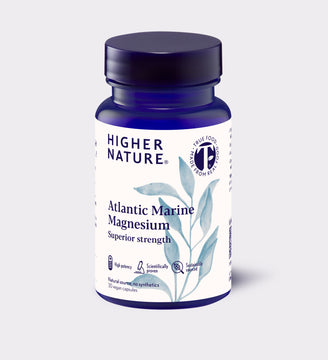
Approximately 60% of the magnesium in your body is found in your bones. Magnesium is essential for converting vitamin D into its active form, which in turn enhances calcium absorption. Not only that, but it also plays a role in modulating the parathyroid hormone, which regulates calcium levels in the body.
Magnesium Effervescent Tablets
Vitamin D3
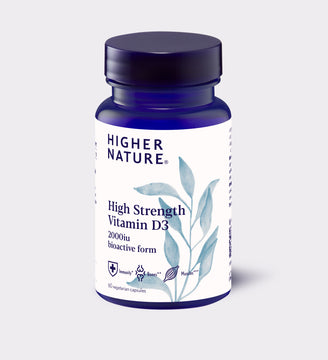
Vitamin D facilitates the absorption of calcium in the digestive system. Because the main catalyst for vitamin D production in the body is sunlight (there are very few significant natural dietary sources of this nutrient), obtaining sufficient quantities can be problematic in the UK. Supplementing with vitamin D during the winter months is essential.
It’s estimated that 75% of the UK population have low vitamin D levels. Sun worshippers aren’t necessarily getting all their vitamin D requirements either, as once your body has produced a tan, this will block further vitamin D production. Those with darker skin tones are also less able to manufacture vitamin D from sunlight, while those with light skin risk skin damage and melanoma, so many of us will benefit from taking vitamin D all year round.
Studies have found that daily low-dose vitamin D supplements also reduce the risk of falling (and fractures). This is thought to be due to the role of vitamin D in muscle strength.
Vitamin K2
Bone formation and the manufacture of osteocalcin, a protein plentiful in bone, require vitamin K. A rich source of vitamin K is natto, a fermented soybean food eaten in Japan but relatively unknown in the West. Although other food sources are easily available, such as green leafy vegetables, many people aren’t eating enough, so supplementing with vitamin K may be essential*.
For a long time, vitamin K supplementation has been overlooked for bone health; however, data suggests that vitamin K2 supplementation might improve bone quality and reduce fracture risk in osteoporotic patients.
An adequate intake of vitamin K2 also helps move calcium into the bones and prevent its accumulation in blood vessels.
Higher Nature uses the VitaMK7® form of vitamin K2, naturally sourced from natto, which is backed by scientific studies that conclude that it is more bioavailable to the body for enhanced benefit.
Other Considerations
Weight-loss diets are familiar to many but may result in accelerated bone loss. The constant pursuit of thinness can lead to deficiencies of essential bone-building nutrients. Low body weight, anorexia, and a small frame are all risk factors for osteoporosis in later life. Other risk factors include a history of irregular periods, high-protein diets, heavy intake of alcohol, smoking, over- or under-exercising, and some medications.
You should also consider other factors that may affect calcium absorption, such as high intake of fizzy drinks that contain phosphoric acid. This is associated with reduced bone turnover, so should be avoided.
Not only can exercise boost your spirits and improve heart health, but regular weight-bearing exercise is essential for building healthy bones. Numerous studies have shown the benefits of exercise on bone density, and improved muscle strength helps prevent falls. It is never too late to start. Walking, jogging, climbing stairs, and exercise with weights have all been found to support bone strength.
*Please note vitamin K supplements may not be suitable for those on blood-thinning medication.
View our Bone & Joint Supplements here.
Our bestsellers


True Food® Vitality Multivitamin for Men
Supports energy, immunity, gut health, beauty & more
From: £29.71

True Food® Whole Minerals
Supports energy, mental performance, immunity, & beauty from within
£22.95


